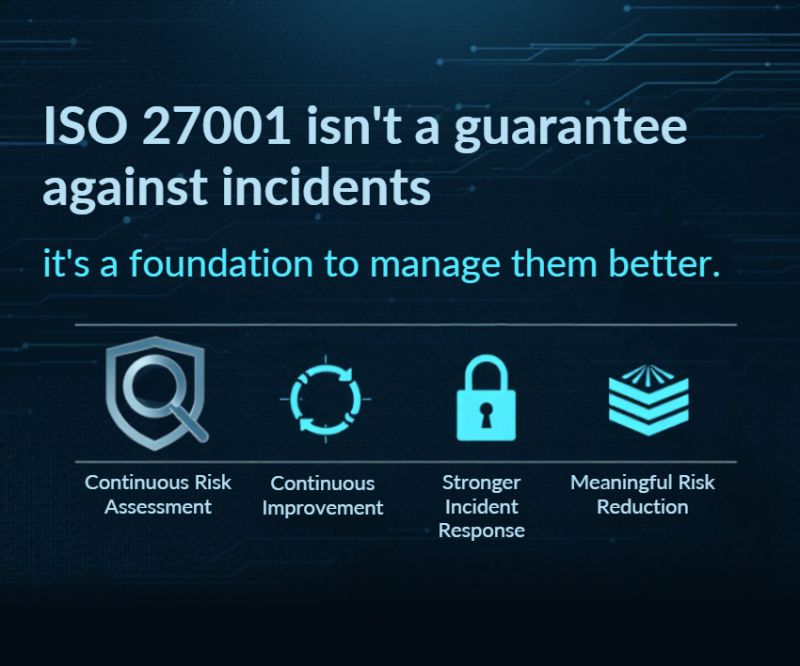
๐—œ๐—ฆ๐—ข ๐Ÿฎ๐Ÿณ๐Ÿฌ๐Ÿฌ๐Ÿญ ๐—ถ๐˜€๐—ป'๐˜ ๐—ฎ ๐—ด๐˜‚๐—ฎ๐—ฟ๐—ฎ๐—ป๐˜๐—ฒ๐—ฒ ๐—ฎ๐—ด๐—ฎ๐—ถ๐—ป๐˜€๐˜ ๐—ถ๐—ป๐—ณ๐—ผ๐—ฟ๐—บ๐—ฎ๐˜๐—ถ๐—ผ๐—ป ๐˜€๐—ฒ๐—ฐ๐˜‚๐—ฟ๐—ถ๐˜๐˜† ๐—ถ๐—ป๐—ฐ๐—ถ๐—ฑ๐—ฒ๐—ป๐˜๐˜€

In 2026, with cyber threats evolving faster than ever โ€” from AI-amplified attacks and supply chain compromises to credential abuse. No framework can promise 100% invulnerability. 
Certified organizations still face breaches.
A point-in-time compliance snapshots can't stop every zero-day, insider mistake, or sophisticated adversary.

Yet that's exactly why ISO 27001 remains essential. 
The standard transforms security from reactive firefighting to systematic risk management.

๐Ÿ” ๐—–๐—ผ๐—ป๐˜๐—ถ๐—ป๐˜‚๐—ผ๐˜‚๐˜€ ๐—ฅ๐—ถ๐˜€๐—ธ ๐—”๐˜€๐˜€๐—ฒ๐˜€๐˜€๐—บ๐—ฒ๐—ป๐˜
The standard requires organizations to regularly identify, analyze, evaluate, and treat information security risks using a formal, documented process. 
This ensures threats are spotted and addressed proactivelyโ€”long before they turn into exploitable vulnerabilitiesโ€”rather than discovering them only during or after an incident.

๐Ÿ”„๐—–๐—ผ๐—ป๐˜๐—ถ๐—ป๐˜‚๐—ผ๐˜‚๐˜€ ๐—œ๐—บ๐—ฝ๐—ฟ๐—ผ๐˜ƒ๐—ฒ๐—บ๐—ฒ๐—ป๐˜ (๐—ฃ๐——๐—–๐—”)
As its core, ISO 27001 follows the Plan-Do-Check-Act (PDCA) cycle, requiring regular reviews, internal audits, management involvement, and updates to the ISMS. 
This keeps security practices alive and adaptive, so controls improve over time as new threats emerge, lessons are learned from incidents or near-misses, and the business environment changes.

๐Ÿšจ๐—ฆ๐˜๐—ฟ๐—ผ๐—ป๐—ด๐—ฒ๐—ฟ ๐—œ๐—ป๐—ฐ๐—ถ๐—ฑ๐—ฒ๐—ป๐˜ ๐—ฅ๐—ฒ๐˜€๐—ฝ๐—ผ๐—ป๐˜€๐—ฒ
The framework requires clear incident management processes, including defined roles, responsibilities, communication plans, and regular testing through exercises or simulations. 
When something does happen, the organization can detect it earlier, contain it more effectively, coordinate the response smoothly, and recover with less confusion and operational disruption.

๐Ÿ›ก๐— ๐—ฒ๐—ฎ๐—ป๐—ถ๐—ป๐—ด๐—ณ๐˜‚๐—น ๐—ฅ๐—ถ๐˜€๐—ธ ๐—ฅ๐—ฒ๐—ฑ๐˜‚๐—ฐ๐˜๐—ถ๐—ผ๐—ป
By embedding risk-based thinking, better visibility across the organization, prioritized controls, and adaptive processes, ISO 27001 helps lower the chances of incidents occurring in the first place and limits their potential impact when they do. 
It creates genuine resilience through structured prevention, early detection, and effective response โ€” rather than relying on luck or hoping threats never find a way in.

๐Ÿ’ก๐—–๐—ฒ๐—ฟ๐˜๐—ถ๐—ณ๐—ถ๐—ฐ๐—ฎ๐˜๐—ถ๐—ผ๐—ป ๐—ถ๐˜€๐—ป'๐˜ ๐—ฎ ๐—บ๐—ฎ๐—ด๐—ถ๐—ฐ ๐˜€๐—ต๐—ถ๐—ฒ๐—น๐—ฑ; ๐—ถ๐˜'๐˜€ ๐—ต๐—ถ๐—ด๐—ต-๐—พ๐˜‚๐—ฎ๐—น๐—ถ๐˜๐˜† ๐—ฎ๐—ฟ๐—บ๐—ผ๐—ฟ. 
It equips organization to take hits, contain damage more effectively, recover with less chaos, and show you're prepared to handle the reality of today's threats.

More Updates

Further reading

๐—œ๐˜€ ๐—ฌ๐—ผ๐˜‚๐—ฟ ๐—˜๐—ป๐˜๐—ฒ๐—ฟ๐—ฝ๐—ฟ๐—ถ๐˜€๐—ฒ ๐—”๐—ฝ๐—ฝ ๐—•๐˜‚๐—ถ๐—น๐˜ ๐—ผ๐—ป ๐—ฎ "๐—ฉ๐—ถ๐—ฏ๐—ฒ" ๐—ผ๐—ฟ ๐—ฎ ๐—™๐—ผ๐˜‚๐—ป๐—ฑ๐—ฎ๐˜๐—ถ๐—ผ๐—ป?

Weโ€™ve all seen the videos: someone prompts an AI agent, and a few "vibes" later, an app appears. Itโ€™s exciting, itโ€™s fast, and it feels like the future.But here is the reality check for 2026: Building an app is easy. Governing, securing, and scaling that app for a global business is the hard part.When you compare "Vibe Coding" to a professional low-code platform like OutSystems, the differences are clear:๐Ÿญ. ๐—ฆ๐—ฝ๐—ฒ๐—ฒ๐—ฑ ๐˜ƒ๐˜€. ๐—ฆ๐—ฒ๐—ฐ๐˜‚๐—ฟ๐—ถ๐˜๐˜†๐Ÿ”น  ๐—ง๐—ต๐—ฒ ๐—ฉ๐—ถ๐—ฏ๐—ฒ:  AI-generated code is fast, but studies show ~80% of it contains security vulnerabilities. You end up spending more effort manually auditing and patching the AI's "vibe" than you saved in the first place.๐Ÿ”ธ  ๐—ข๐˜‚๐˜๐—ฆ๐˜†๐˜€๐˜๐—ฒ๐—บ๐˜€:  Security is built-in, not bolted on. With a native WAF and compliance (SOC 2, ISO 27001) baked into the platform, your team stops worrying about vulnerabilities and starts focusing on features.๐Ÿฎ. "๐—–๐—ผ๐—บ๐—ฝ๐—ฟ๐—ฒ๐—ต๐—ฒ๐—ป๐˜€๐—ถ๐—ผ๐—ป ๐——๐—ฒ๐—ฏ๐˜" ๐˜ƒ๐˜€. ๐—ฅ๐—ฒ๐—ฎ๐—น ๐—ข๐˜„๐—ป๐—ฒ๐—ฟ๐˜€๐—ต๐—ถ๐—ฝ๐Ÿ”น  ๐—ง๐—ต๐—ฒ ๐—ฉ๐—ถ๐—ฏ๐—ฒ:  If an AI agent writes 1,000 lines of code you donโ€™t understand, you donโ€™t own itโ€”youโ€™re just hosting it. If it breaks at 2 AM, who fixes it? This creates "structural entropy" that makes systems brittle over time.๐Ÿ”ธ  ๐—ข๐˜‚๐˜๐—ฆ๐˜†๐˜€๐˜๐—ฒ๐—บ๐˜€:  You get visual, self-documenting logic. Itโ€™s easy to read, easy to change, and generates standard, optimized code. You retain 100% mastery over your architecture.๐Ÿฏ. ๐—ฃ๐—ฟ๐—ผ๐˜๐—ผ๐˜๐˜†๐—ฝ๐—ฒ๐˜€ ๐˜ƒ๐˜€. ๐—ฃ๐—ฟ๐—ผ๐—ฑ๐˜‚๐—ฐ๐˜๐—ถ๐—ผ๐—ป ๐—ฅ๐—ฒ๐—ฎ๐—น๐—ถ๐˜๐˜†๐Ÿ”น  ๐—ง๐—ต๐—ฒ ๐—ฉ๐—ถ๐—ฏ๐—ฒ:  AI is great at the "happy path." It struggles with the messy reality of 20-year-old legacy databases or scaling to millions of users without crashing.๐Ÿ”ธ  ๐—ข๐˜‚๐˜๐—ฆ๐˜†๐˜€๐˜๐—ฒ๐—บ๐˜€:  Itโ€™s built for the enterprise "Day 2." It bridges the gap to legacy systems effortlessly and handles massive workloads with a fault-tolerant design.๐—ง๐—ต๐—ฒ ๐—–๐—ผ๐—ป๐˜€๐˜‚๐—น๐˜๐—ฎ๐—ป๐˜โ€™๐˜€ ๐—•๐—ผ๐˜๐˜๐—ผ๐—บ ๐—Ÿ๐—ถ๐—ป๐—ฒVibe coding is a fantastic tool for personal prototypes. But for mission-critical systems, you need a foundation that trades "vibes" for ๐—ฟ๐—ฒ๐—น๐—ถ๐—ฎ๐—ฏ๐—ถ๐—น๐—ถ๐˜๐˜† ๐—ฎ๐—ป๐—ฑ ๐—ด๐—ผ๐˜ƒ๐—ฒ๐—ฟ๐—ป๐—ฎ๐—ป๐—ฐ๐—ฒ.At Ringus, we help you get the speed of modern development with the bulletproof security of OutSystems. We handle the complexity so your "vibe" never turns into a technical nightmare.Ready to build something that actually scales?  Letโ€™s chat.